-
Upselling offers a better version of the product being considered, and cross-selling adds a product that completes it;
-
Both raise order value from customers already in the funnel, with no extra ad spend;
-
The offers that work are relevant, shown at the right moment and limited to one or two at a time;
-
Aqurate Personalize chooses cross-sells and upsells for each shopper, with published results on order value and basket size.
A shopper adds a camera to her cart. On the cart page she sees a list of twelve "recommended products": a vacuum cleaner, a phone case, a winter jacket. Nothing about the memory card she'll need on day one. She checks out with the camera alone and buys the card the next week from another store.
Cross-selling and upselling strategies in ecommerce exist to catch that moment. Below are the difference between the two, the methods and placements that convert, the right timing and how to measure whether an offer earns its place.
Chapters:
1. What are cross-selling and upselling strategies in ecommerce?
2. What is the difference between a cross sale and an up sale?
3. Why is upselling important for ecommerce growth?
4. How does cross-selling increase average order value?
5. Which up selling methods actually convert?
6. Which cross selling products do customers actually want?
7. What makes good cross selling UX?
8. When is the best time to upsell a customer?
9. How do you measure the success of an upsell?
10. Which upselling and cross selling examples work?
11. Why is Aqurate the best choice for cross-selling and upselling?
12. Frequently asked questions about cross-selling and upselling
13. One right offer beats ten random ones
What are cross-selling and upselling strategies in ecommerce?
Cross-selling and upselling strategies in ecommerce rely on one idea: the customer already in your funnel is worth more than the one you haven't won yet. Upselling moves the shopper toward a higher-value version of the product they want. Cross-selling widens the basket with something that pairs naturally with it. Both skip the expensive part of growth, acquisition, and work on demand you already have.
The economics explain why. Depending on the study and industry, acquiring a new customer costs five to 25 times more than keeping an existing one, according to Harvard Business Review. Recommendations also carry real weight in sales: McKinsey estimated in 2013 that about 35% of Amazon purchases came from recommendations, while a University of Florida study that tracked real shopper behavior measured a more modest 11% boost in sales.
Neither tactic works as an afterthought added to checkout. Both work as a connected system, built on clean product data and personalization that matches each offer to what a specific shopper is likely to buy next.
What is the difference between a cross sale and an up sale?
A cross sale and an up sale share a goal and differ in direction. Upselling moves the purchase up, to a better version of the same product. Cross-selling moves it wider, with a separate item that completes it. The upsell and cross sell meaning often gets blurred because both appear as "recommended products", but the logic behind each is different.
What is up selling and cross selling in practice? An up sell replaces the product being considered with a more capable one. A cross sell adds a product next to it. An e commerce upsell usually works through tiers, such as a standard model and a pro version, while a cross sell adds a complementary accessory to the same cart.
|
Dimension
|
Upselling
|
Cross-selling
|
|
What it offers
|
A higher-tier or upgraded version of the chosen product
|
A separate product that complements it
|
|
Best timing
|
While the shopper is still deciding
|
Once the main product is in the cart
|
|
Typical placement
|
Product page, comparison tables
|
Product page, cart, order confirmation
|
|
Risk if overdone
|
Feels like a pressured, pricier swap
|
Feels like checkout clutter
|
Mix them up and both underperform. A cross-sell slot that pushes a pricier substitute confuses a shopper who had already decided what to buy.
Why is upselling important for ecommerce growth?
Upselling raises what the whole customer relationship is worth, beyond a single order. A store that only ever sells its entry-level product teaches customers to think at entry level. An upsell accepted once resets that reference for the orders that follow.
Customer lifetime value and upselling are linked for a structural reason: acquisition is the expensive part of ecommerce, and selling more to someone who already trusts the store costs far less. A customer upsold to a premium tier spends more on that order and comes back with a higher reference price.
Across a year of repeat purchases, the gain in lifetime value is far larger than the gain on one order. That's why mature ecommerce teams track lifetime value by cohort, beyond average order value per transaction, when they decide whether an upsell program earns its place.
How does cross-selling increase average order value?
Cross-selling increases average order value by adding a second, usually smaller, decision to a purchase the customer has already committed to. That second decision faces a much lower barrier: the shopper has chosen to buy and trusts the store, so the extra item only has to look clearly useful.
Cross-selling's impact on conversion rate comes from the same mechanism. A good cross-sell answers the question the customer would ask anyway, "what else do I need for this to work?", before they have to ask it. Relevant add-ons convert well without any extra traffic.
That's why cross-selling can lift order value without hurting conversion. It builds on the main purchase decision. Online tea retailer Arta Ceaiului, for example, increased its average order value by 23% after adding AI-driven product recommendations.
Which up selling methods actually convert?
The up selling methods that convert make the upgrade look obvious, without pressure. These upselling tactics for online retailers work across most catalogs:
-
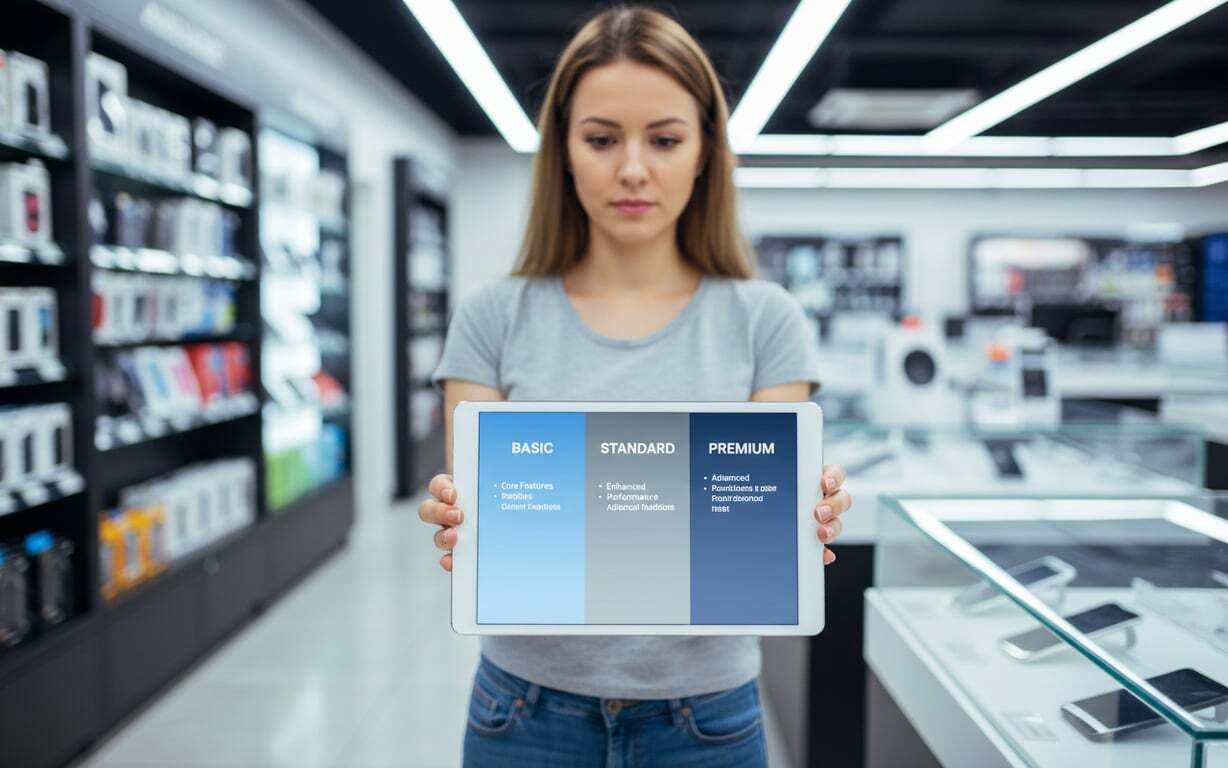
Good, better, best tiers: three versions of the same product with a visible comparison, and the middle one marked as recommended;
-
Feature-led comparison: lead with what the upgrade does, such as more storage or a longer warranty, before the price difference;
-
Upgrade prompts on the product page: show the premium version while the shopper is still comparing, before they settle on the base model;
-
Upgrade offers before payment: one clearly priced upgrade just before checkout, when intent is highest and the extra amount feels small next to the total;
-
History-based upsells: use past purchases to suggest the logical next step, such as a newer model a year after the first purchase.
The common thread is restraint. Two or three upgrade options, each with a clear reason, work better than ten. A page crowded with choices raises the bounce rate, because shoppers freeze.
Which cross selling products do customers actually want?
The cross selling products customers actually want are the ones that complete the purchase in front of them. A suggestion feels helpful when it answers a need the main product creates, and pushy when it only serves the store's margin. A camera buyer needs a memory card. A blender buyer benefits from a spare jar. Start from that need, before margin, and the cross-selling strategy for online stores becomes much simpler.
Keep the add-on well below the price of the main product. A $200 purchase pairs naturally with a $30 accessory; a $150 add-on on the same screen feels like a second sale squeezed in.
-
Consumables and refills: filters, batteries or ink, where the need is recurring and obvious;
-
Frequently bought together: items real customers already buy together, taken from order data;
-
Protection and services: warranties, gift wrapping or faster shipping, which add value without competing with the product;
-
Bundles: related items sold together, with the saving shown clearly.
Which cross-selling techniques work best for ecommerce? Across catalogs, the products that get added to the cart are the ones the customer would have had to buy elsewhere anyway. Margin comes second.
What makes good cross selling UX?
Good cross selling UX shows the right offer to the right shopper without slowing the page or interrupting the path to payment. Placement, speed and personalization decide whether a suggestion feels helpful or like clutter.
|
Placement
|
What works
|
Why
|
|
Product page
|
Frequently bought together, alternatives, upgrades
|
The shopper is still evaluating
|
|
Mini-cart and cart
|
One-click add-ons
|
Intent is high, and any extra step costs sales
|
|
Checkout
|
One small add-on at most
|
The priority is finishing the payment
|
|
Order confirmation and email
|
Larger cross-sells and complementary items
|
The main sale is already secured
|
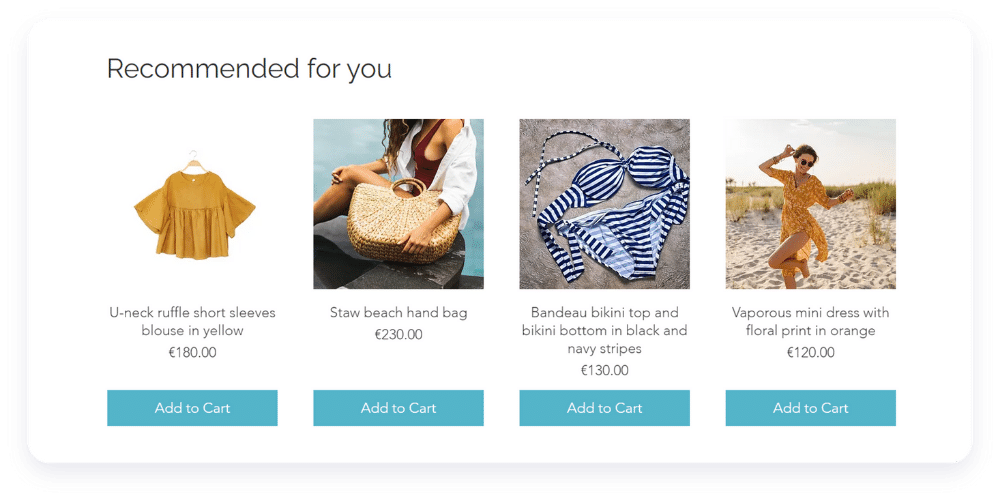
Speed matters more than most teams think. A recommendation block that loads late teaches shoppers to ignore that part of the page, and mobile users are even less patient. AI-driven personalization helps here too, scoring product affinity in real time so suggestions feel individual, where static, hand-picked rows feel generic. Aqurate's guide on placing AI-driven product recommendations breaks down which type works best on each page template.
Merchandising controls complete the system: exclude out-of-stock items, limit how many suggestions appear and override the algorithm for seasonal campaigns.
When is the best time to upsell a customer?
The best time to upsell a customer is when they've committed to the category but haven't settled on the exact product. In that window, a better option feels like a win, without feeling like a detour.
-
On the product page: while the shopper compares models, a visible premium option lets them trade up before they fix on the base version.
-
In the cart, before checkout: one clearly priced upgrade catches peak intent without adding a step to payment.
-
Just before payment: a limited-time upgrade works because urgency adds to an intent that's already high.
-
Some time after the first purchase: a follow-up tied to how the product is used, such as an upgrade a year later, lands once the customer can value the improvement.
All four moments sit close to an active decision. An upsell shown when nothing is being decided, such as a banner for a first-time visitor on the homepage, converts far less.
How do you measure the success of an upsell?
You measure the success of an upsell by checking that it raises order value without quietly costing completed orders. Watch these metrics together:
|
Metric
|
What it tells you
|
|
Attach rate
|
Share of orders that include the offered product
|
|
Average order value
|
Whether orders grow, compared with a control group that didn't see the offer
|
|
Incremental revenue
|
The real gain, after removing what customers would have spent anyway
|
|
Conversion rate and cart abandonment
|
The guardrails: if order value rises while conversion falls, the offer is too aggressive
|
|
Customer lifetime value
|
Whether the upsell builds a higher-spending relationship or only inflates one order
|
Read every metric by customer segment. A strong overall attach rate can hide a valuable segment that ignores every offer.
Which upselling and cross selling examples work?
The upselling and cross selling examples that work share one trait: the offer is specific, visible and tied to the purchase in front of the shopper. These patterns appear in stores that do it well:
-
"Double it" upgrades: a florist offers to double the bouquet for a small extra charge, a single, concrete decision;
-
One-click presentation add-ons: a gift bag or gift wrap offered at checkout as a tick box, without sending the shopper to find a separate product;
-
"You might also need" modules: suggestions tied to the item in view, such as storage boxes for holiday décor, where unrelated furniture would distract;
-
Styling language: a module labeled "goes great with" reads as advice, where "recommended products" reads as a sales pitch;
-
Protection plus accessory in the cart: an extended warranty (upsell) and a truly complementary accessory (cross-sell) offered together the moment an electronics item is added.
Each pattern shows one relevant offer, at the moment the shopper is already leaning toward yes.
Why is Aqurate the best choice for cross-selling and upselling?
For B2C stores with 1,000+ products, Aqurate Personalize is the strongest choice for cross-selling and upselling. It chooses complementary products and upgrades for each shopper automatically, while the merchandising team keeps control over what appears.
-
10+ recommendation types: cross-sell, up-sell, similar products, frequently bought together and recommended for you, on the homepage, product pages, cart and in email;
-
AI trained on the store's own data: the model learns from orders, visits and the catalogue and refreshes every 24 hours, so suggestions follow stock and buying patterns;
-
Merchandising control: pin products, filter by margin, stock or brand and add campaign rules on top of the AI, for example to push high-margin accessories;
-
Clear attribution: reporting shows orders with recommended products and revenue from recommendations, so the gain in order value is easy to prove;
-
Fast setup: connects in minutes on Shopify, Gomag and MerchantPro, with no developers.
The published case studies show the effect on cross-sells and upsells:
|
Store
|
What it measured
|
Result
|
|
Deluxe Tuning
|
Upsells on product pages, frequently bought together at add-to-cart
|
Upsells: 4.95% of all orders and 3.74% of revenue; FBT: 2.38% of orders; 43.4% larger baskets on recommendation-assisted orders
|
|
Camelino
|
Frequently bought together, alternative products
|
FBT drove the largest order value increase; 9% of all orders came from recommendations
|
|
Dotare Băi
|
Recommendations across category, product, cart and exit-intent
|
+58.3% average order value for users exposed to recommendations
|
|
Dames.ro
|
AI recommendations
|
+51% average order value, +46% basket size
|
|
Pursehuit
|
Smart Bundles on Shopify
|
+9% basket size
|
If your cart page still shows the same best sellers to everyone, Aqurate offers a 30-day free trial with all features included, and the Aqurate Personalize page shows how it connects to your store.
Frequently asked questions about cross-selling and upselling
Is upselling or cross-selling more profitable for ecommerce stores?
Neither wins on its own. Upselling tends to raise order value more per transaction, while cross-selling adds revenue more steadily across smaller carts. The strongest programs run both.
Can cross-selling and upselling hurt the customer experience?
Yes, when there are too many offers or the suggestions don't fit the purchase. That raises cart abandonment and makes shoppers ignore every future suggestion.
What conversion rate should you expect from an upsell offer?
It depends on the catalog and placement, so test it against a control group. Relevant, one-click offers consistently do better than generic offers shown to every visitor.
Do cross-selling and upselling work differently at checkout and in email?
Yes. Checkout offers need to be fast and frictionless, because intent is already high. Email has room for a larger ask once the main sale is secured.
How often should recommendation algorithms update?
As often as the catalog and buying behavior change, ideally every day. Aqurate's model, for example, refreshes every 24 hours.
How do I add AI cross-sell and upsell recommendations to my store?
Use a recommendation engine that connects to your ecommerce platform and email tool. Aqurate Personalize connects in minutes on Shopify, Gomag and MerchantPro, without developers.
One right offer beats ten random ones
Cross-selling and upselling work when each offer answers a real need at the right moment. Start with one well-placed offer, measure its effect on both order value and conversion, then expand. Adding every tactic at once makes it impossible to tell which one works.
Related reading: