The second order is the hardest to win, and the first 30 days after delivery decide most of it;
First-time buyers leave over low value, friction, wrong timing or a better alternative;
Post-purchase emails, easy reordering and loyalty rewards for specific actions bring them back;
Track repeat purchase rate, purchase frequency and churn to see which fix works.
A customer orders a bottle of face serum, likes it and uses it every morning. Six weeks later the bottle is almost empty. The store never wrote after the shipping confirmation, so she searches the product name, finds it cheaper on a marketplace and orders it there.
Turning first-time buyers into repeat customers means planning for that moment before it arrives. Below are the reasons first-time customers don't return, the retention strategies that bring them back and the metrics that show what works.
Chapters:
1. Why does turning first-time buyers into repeat customers matter?
2. What is the difference between recurring customers, repeat buyers and returning customers?
3. What makes a buyer become a loyal repeat customer?
4. Why do first-time customers not return?
5. How to get repeat customers: retention strategies for first-time buyers
6. How does customer loyalty program design keep buyers coming back?
7. What email cadence works for customer retention after purchase?
8. How does Aqurate help turn first-time buyers into repeat customers?
9. How does customer lifetime value calculation work?
10. What is customer retention rate and why does it matter?
11. Which churn rate reduction techniques work for ecommerce?
12. Frequently asked questions about repeat customers
13. The second order is built after the first
Why does turning first-time buyers into repeat customers matter?
Turning first-time buyers into repeat customers matters because each new customer gets more expensive to acquire, while a store that depends only on first orders has to buy its revenue again every month.
Acquisition cost: depending on the study and the industry, acquiring a new customer costs five to 25 times more than keeping an existing one, according to Harvard Business Review;
Profit: the same article cites research by Frederick Reichheld of Bain & Company showing that a 5% increase in customer retention raises profits by 25% to 95%;
Spend over time: in an early study of online retailers, the average repeat shopper at an apparel site spent 67% more in months 31 to 36 than in the first six months
Repeat buyers also bring referrals that cost nothing to acquire. As ad costs rise, that base keeps revenue predictable, a shift covered in Search, recommend, reward: how to make every visit count.
What is the difference between recurring customers, repeat buyers and returning customers?
Recurring customers, repeat buyers and returning customers describe different buying patterns, and each needs a different retention tactic.
Buyer type | Purchase pattern | Example | What moves them forward |
|---|
One-time shopper | One purchase, no return | Buys a gift once | A relevant reason for a second order |
Returning customer | Comes back irregularly, when a need appears | Buys boots in winter, sneakers months later | A well-timed reminder |
Repeat buyer | Buys regularly, without a fixed schedule | Reorders protein powder every six to eight weeks | One-click reordering, replenishment emails |
Recurring customer | Buys on a fixed, automatic cycle | Monthly pet food delivery | Flexible subscription options |
What is the term for a returning customer? In everyday use, repeat customer or repeat buyer covers anyone who keeps buying. Recurring customer implies a subscription or auto-reorder. The step from returning customer to long term customer usually comes from good timing, while the step from repeat buyer to recurring customer comes from a subscription that makes repeat purchasing the default.
What makes a buyer become a loyal repeat customer?
A buyer becomes a loyal repeat customer when several good experiences add up. One clean transaction rarely creates loyalty, but a short series of orders that all go well usually does.
Five factors reinforce each other:
Consistent quality: the product and the delivery meet expectations on every order, not only the first;
Functional and emotional value: the product solves a real problem, and the unboxing and service feel good;
Convenience: fast checkout, predictable delivery and easy returns leave no reason to shop elsewhere;
Trust: clear policies and responsive support make the second purchase feel safe;
Habit: reminders, reorder prompts and subscriptions turn buying from your store into routine.
Personalization connects all five. A buyer who gets offers and suggestions based on their own orders feels recognized, while generic messages are an easy way to lose a customer who was otherwise satisfied.
Why do first-time customers not return?
First-time customers usually don't return for one of four reasons, and a bad product is rarely the main one.
Reason customers don't return after first purchase | What it looks like | The fix that matches it |
|---|
Not enough value | The product works, but nothing makes it stand out | Better onboarding, usage tips, complementary products |
Friction | Late delivery, a hard return, slow support | Fix the operational problem first |
Wrong timing | The product doesn't need replacing yet | A reminder timed to the real usage cycle |
A better alternative | A competitor reached the customer first | Personalized follow-up, loyalty perks |
Subscription businesses see a fifth pattern: involuntary churn from expired cards or failed payments, which automatic payment retries and card update reminders can catch.
Shoppers also compare every store with the best experience they've had anywhere, as Aqurate explains in Rising customer expectations in the eCommerce environment. Find out which reason drives your own drop-off before you choose a tactic. A loyalty discount won't fix a delivery problem.
How to get repeat customers: retention strategies for first-time buyers
To get repeat customers, plan the second purchase the moment the first one ends. These customer retention strategies for first-time buyers work across categories and give the best results combined.
Rebuild the order confirmation email. It's one of the most opened emails a store sends, so use it to confirm the customer made a good choice, beyond the tracking number.
Personalize by segment. Group customers by what they bought and how likely they are to reorder, and send each group offers that match.
Enable one-click reordering. A visible "buy again" button in the account and in emails makes the second order almost automatic.
Offer subscriptions where they fit. Skincare, supplements and pet food convert well when auto-delivery removes the need to remember.
Reach out before they complain. A message about a shipping delay, with a small gesture, protects the relationship before a complaint forms.
Bundle related products. Complementary items sold together at a small discount raise both value and order size.
Collect reviews after the first order. Reviews and customer photos reduce doubts for the next purchase, yours and other shoppers'.
These strategies to convert new customers into repeat buyers don't depend on deep discounts. The answer to what strategies increase repeat purchase rate and how businesses can build customer loyalty after first purchase is usually the same: reward specific actions, such as a review, a referral or a reorder. Blanket coupons teach shoppers to wait for the next sale, so rewarding actions is also the simplest way to retain customer loyalty without losing margin.
How does customer loyalty program design keep buyers coming back?
Good customer loyalty program design rewards the actions that predict future purchases, beyond spending itself, and shows customers how close they are to the next reward.
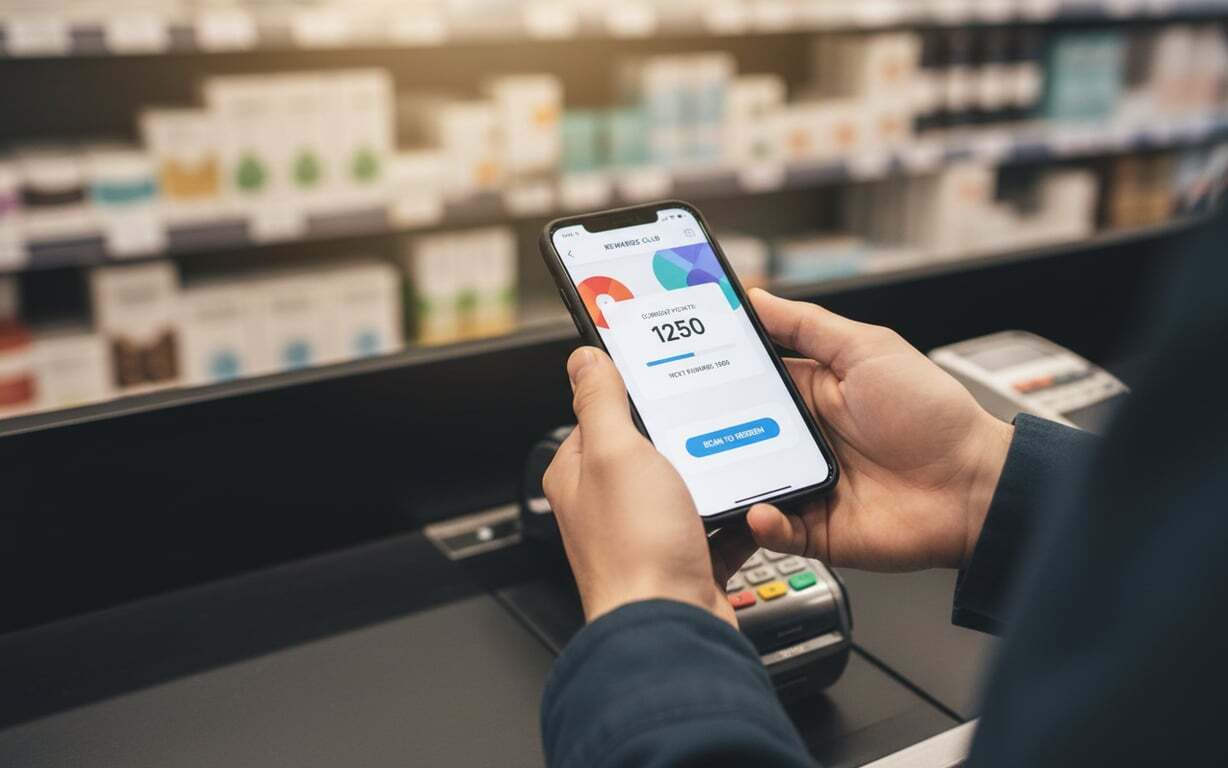
Programs that only give points per dollar often pay for orders that would have happened anyway. The ones that build a habit share a few traits:
Rewards for valuable actions: reviews, referrals, social shares and reorders all earn points;
Visible progress: the account, emails and checkout show how much is left to the next reward;
A reachable first reward: customers who earn something early are more likely to stay in the program;
Perks beyond discounts: early access, free shipping or samples protect margin better than percentage-off codes.
Referral programs to boost repeat purchases
Referral programs to boost repeat purchases work in two directions. The customer who refers stays engaged with the brand, and the friend arrives through someone they trust. Reward both sides, and put the referral link in the order confirmation and the account page.
Customer segmentation for repeat purchase campaigns
Customer segmentation for repeat purchase campaigns makes all of this possible. Split customers by purchase history and engagement, and send each group a different offer. How search and recommendations support this kind of targeting is covered in Unlocking Revenue: How Search and Recommendations Work Better Together.
What email cadence works for customer retention after purchase?
The right email cadence for customer retention starts at checkout and follows the product's natural reorder cycle. The first 30 days after delivery matter most, because satisfaction is fresh and the habit is still forming.
A dependable onboarding experience for new customers has four touchpoints:
Email | When to send | What it does |
|---|
Order confirmation | Right after checkout | Confirms the choice, sets delivery expectations |
How-to-use guide | When the product arrives | Helps the customer get value fast |
Check-in | One to two weeks after delivery | Asks for feedback or a review, offers help |
Replenishment reminder | Shortly before the product usually runs out | Makes the second order easy |
Transactional emails, such as order confirmations, are generally opened far more often than marketing emails, which makes them valuable space for reinforcing the purchase.
The content decides whether each email gets read. Product suggestions based on what the customer bought work better than a generic "shop again" prompt.
How does Aqurate help turn first-time buyers into repeat customers?
Aqurate automates the personalization part of the path to a second order. Its personalized product recommendations use each store's product and behavior data to suggest items to every visitor, on the homepage, product pages and cart and in emails.
For first-time buyers, this helps at three points:
The goal at each point is the same: make the second order feel like the obvious next step for that specific customer.
How does customer lifetime value calculation work?
Customer lifetime value calculation shows what a customer is worth over the whole relationship, and it tells you how much you can spend to win a second order.
Customer lifetime value = average order value × purchase frequency per year × customer lifespan in years × gross margin
A customer who spends $50 per order, buys four times a year and stays for three years brings $600 in revenue. At a 40% gross margin, that's $240 in profit. A customer who orders once at $50 brings $20 in profit. The difference between those two numbers is the budget available for post-purchase emails, loyalty perks and support.
The version often quoted, purchase frequency × average order value, shows one year of revenue and ignores costs, so it says little about what you can afford to spend.
What is customer retention rate and why does it matter?
Customer retention rate is the share of customers a store keeps over a period. It matters because it's the earliest sign that the post-purchase experience works, or doesn't.
Customer retention rate = (customers at end of period − new customers) ÷ customers at start of period × 100
These customer retention metrics and KPIs complete the picture:
KPI | How to calculate it | What it shows |
|---|
Repeat purchase rate | Customers with 2+ orders ÷ total customers × 100 | Share of buyers who came back at least once |
Days to second order | Median days between first and second order | When to send the first reminder |
Purchase frequency | Orders ÷ unique customers, per period | How often a typical customer buys |
Average order value | Revenue ÷ orders | How much each order brings |
Compare these numbers with your own history and category. Repeat rates differ widely between consumables bought every month and furniture bought every few years. If retention falls while first-order volume stays flat, look first at the post-purchase experience.
Which churn rate reduction techniques work for ecommerce?
Churn rate reduction techniques for ecommerce start with spotting customers who are drifting away, then reaching them with a relevant message before they leave for good.
Churn rate = customers lost in a period ÷ customers at the start of the period × 100
Timing makes the difference. Contact a customer when they pass about one and a half times their usual purchase interval, with a friendly check-in or a product suggestion. Waiting until they've been inactive for months makes them much harder to bring back.
For larger customer bases, a predictive CLV model helps choose who gets the most attention. Spending win-back effort on the lapsed customers who were worth the most brings more than one discount sent to the whole dormant list.
Two more levers protect margin:
Proactive support: a message when something goes wrong, such as a delay, an open ticket or an unusually long gap since the last order, with a small gesture of goodwill;
Closing the feedback loop: telling customers what changed because of their feedback, so they see the relationship goes beyond the transaction.
Frequently asked questions about repeat customers
How long does it take to turn a first-time buyer into a repeat customer?
The best opportunity comes in the first 30 days after delivery, while satisfaction is fresh. Real loyalty usually takes several good orders.
What is a good repeat customer rate for an ecommerce store?
It depends on the category. Stores selling consumables bought every month reach much higher rates than stores selling large, rare purchases. Your own trend over time, and the rate of comparable stores in your category, are the most useful benchmarks.
Do discounts or personalized outreach bring more repeat purchases?
Personalized, relevant follow-up works better over time. Discounts can teach shoppers to wait for the next sale, while recommendations based on their orders build a habit of buying at full price.
What is the difference between a repeat customer and a loyal customer?
A repeat customer has bought more than once. A loyal customer chooses your store again without comparing alternatives. Loyalty programs aim to move buyers from the first group into the second.
Do referral programs increase repeat purchases?
They can. Customers who refer friends stay more engaged with the brand, and referred customers arrive with trust already built. Compare their repeat rate with other channels in your own data.
The second order is built after the first
Retention starts with the order confirmation and grows with every purchase that goes well. Find the main reason your first-time buyers don't come back, fix that first, then add loyalty rewards and post-purchase emails once the basics work.
Related reading: