About 70% of online carts are abandoned, so benchmark against your own vertical;
Extra costs, forced accounts and slow delivery are the most cited causes of shopping cart abandonment;
Show the full total early, offer guest checkout and digital wallets, and audit checkout on mobile first;
Recover the rest with a two- or three-email sequence, the first sent within an hour.
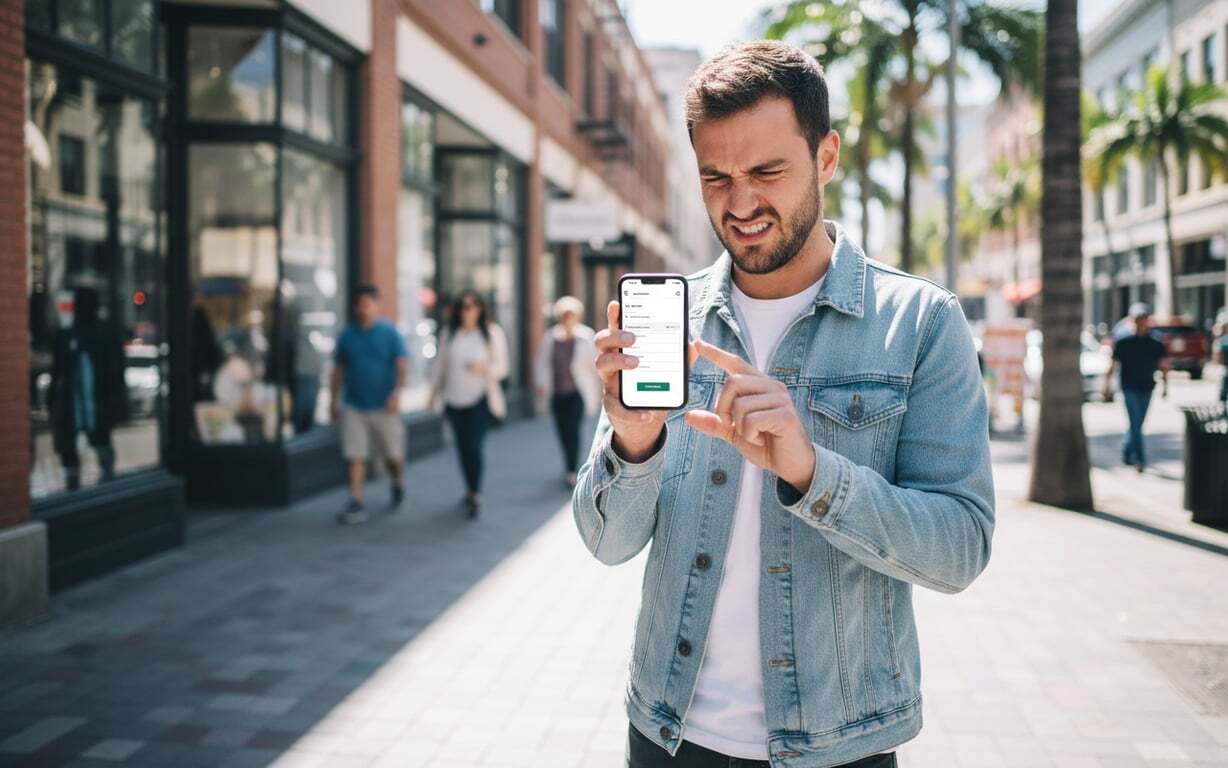
A shopper adds a jacket to her cart on her phone during a commute. At checkout she has to create an account, then learns that shipping adds $9 and delivery takes a week. She closes the tab and tells herself she'll finish on her laptop at home. She never does.
Reducing shopping cart abandonment starts with removing those moments of friction from checkout, then recovering the shoppers who still leave with well-timed emails. Below are the benchmarks, the causes of cart abandonment and the fixes that bring buyers back, from checkout design to cart abandonment email best practices.
Chapters:
1. What is a good cart abandonment rate?
2. Why do customers abandon their shopping carts?
3. How does cart abandonment affect ecommerce revenue?
4. What causes high cart abandonment on mobile?
5. Which ecommerce trust signals at checkout reduce abandonment?
6. How do payment options affect cart abandonment?
7. How does shipping cost transparency reduce cart abandonment?
8. Do exit-intent popups for cart recovery work?
9. What are the cart abandonment email best practices?
10. How can retailers reduce cart abandonment rate beyond checkout and email?
11. How does AI personalization help with abandoned cart recovery?
12. Frequently asked questions about cart abandonment
13. Every recovered cart starts at checkout
What is a good cart abandonment rate?
A good cart abandonment rate is one that sits below the average for your vertical. Globally, Baymard Institute puts the average at 70.22%, calculated from 50 studies in its cart abandonment rate statistics, last updated in September 2025. Seven in ten shoppers who add a product to the cart leave without paying.
The global figure hides large differences between categories. Shoppers buying everyday essentials abandon less, while travel and luxury purchases, which people think over longer, are abandoned more often.
Vertical | Typical cart abandonment rate |
|---|
Grocery and everyday essentials | Roughly 50% to 60% |
Fashion, apparel, general retail | Roughly 70% to 85% |
Travel, luxury, high-consideration goods | Roughly 80% to 91% |
Baymard doesn't publish rates by vertical. These ranges come from industry compilations that differ by source and year, so treat them as orientation.
A rate several points below your category's typical range shows that your checkout performs better than your peers'. Track the trend month by month, because a sudden rise usually points to a specific problem, such as a new fee or a broken payment step.
Why do customers abandon their shopping carts?
Customers abandon their shopping carts for reasons that fall into three groups: cost, friction and trust. The causes of shopping cart abandonment are similar across studies, which is why checkout abandonment is so common: the fixes are known, yet many stores still run the same checkout flows.
In Baymard's survey of US online shoppers, after excluding those who were just browsing, the most cited reasons are:
Unexpected costs (40%): shipping, taxes or fees that make the total too high, the most cited reason by a clear margin;
Slow delivery (20%): a delivery window longer than the shopper expected;
Trust and security doubts (19%): shoppers who don't trust the site with their card details;
Forced account creation (18%): a mandatory signup before payment;
Checkout friction and errors (17% each): a long or complicated checkout, or a site that throws errors mid-purchase;
Payment problems: a declined card (10%) or not enough payment methods (9%).
A separate group of carts was never meant to convert. In the same survey, 42% of US online shoppers said they had abandoned a cart because they were just browsing or not ready to buy, and Baymard treats this group apart from the fixable causes. Recovery efforts work best on shoppers who reached checkout or showed strong purchase signals.
How does cart abandonment affect ecommerce revenue?
Cart abandonment is one of the largest recoverable revenue losses in ecommerce. Baymard Institute estimates that a large ecommerce site can raise its conversion rate by about 35% through better checkout design. Applied to combined US and EU ecommerce sales, that equals about $260 billion in recoverable orders.
The effect is easy to see in a single store. Take 100,000 monthly visits, an average order value of $60 and a 0.8% conversion rate, which gives 800 orders. Lift conversion to 1.3% and the store gets 500 more orders, or about $30,000 more revenue per month, with the same traffic and no extra acquisition spend.
For independent retailers, checkout performance is also a competitive issue. They already face competitive pressure from fast-growing, low-cost marketplaces like Temu and Shein, and a shopper who leaves a slow checkout often finishes the purchase on one of them.
What causes high cart abandonment on mobile?
Cart abandonment on mobile runs well above desktop. Industry compilations typically put it around 80% on phones and about two-thirds on desktop. The exact figures vary by source and measurement method, so the gap matters more than any single number.
Device | Typical cart abandonment rate |
|---|
Mobile | Roughly 78% to 80% |
Tablet | Roughly 70% |
Desktop | Roughly 65% to 67% |
This is why cart abandonment segmentation by device matters. One overall rate for all traffic hides where the losses actually happen.
The causes are mostly structural:
Forms: multi-field checkout forms turn into a typing chore on a small screen;
Precision: mis-taps on small buttons multiply validation errors;
Speed: pages that load fine on a laptop slow down on a weak mobile connection;
Layout: checkouts designed for desktop and shrunk for phones force zooming and scrolling.
The fixes take engineering time, but they're clear. Digital wallets such as Apple Pay and Google Pay replace almost the entire form, autofill should work on every field that supports it, and each checkout step needs its own mobile-first review.
Which ecommerce trust signals at checkout reduce abandonment?
Ecommerce trust signals at checkout reassure shoppers who hesitate to pay. They matter more than many brands think: in PwC's Trust in US Business Survey, 90% of executives said customers highly trust their company, while only 30% of consumers said they do.
The signals that carry the most weight:
Security: SSL, recognizable payment logos and clear data protection information near the payment step;
Reviews: genuine customer ratings on product pages, including a few critical ones, which make the positive reviews more credible;
Return policy: a clear, easy-to-find policy linked from the cart and checkout;
Consistency: the same prices and product details across the site, marketplaces and ads;
Product content: complete descriptions and good photos, so shoppers don't leave to check details elsewhere.
Trust starts on the product page, before checkout. Relevant recommendations placed where shoppers make decisions also help them feel the store understands what they need, and Aqurate's best practices for placing AI-driven product recommendations cover where they work best.
How do payment options affect cart abandonment?
Payment options reduce cart abandonment when they match how your customers want to pay. Some shoppers leave because their preferred method isn't offered, and others leave after a declined card, without trying a second one.
The usual setup covers four groups:
Cards: credit and debit cards, the baseline for any store;
Digital wallets: Apple Pay, Google Pay, Shop Pay or PayPal, which skip manual entry;
Buy now, pay later: useful for higher-ticket purchases, where splitting the payment helps the shopper decide;
Local methods: bank transfers or regional wallets popular in the markets you sell to.
Show the accepted payment logos early, on product pages and in the cart. Shoppers move faster through checkout when they already know their option is there.
How does shipping cost transparency reduce cart abandonment?
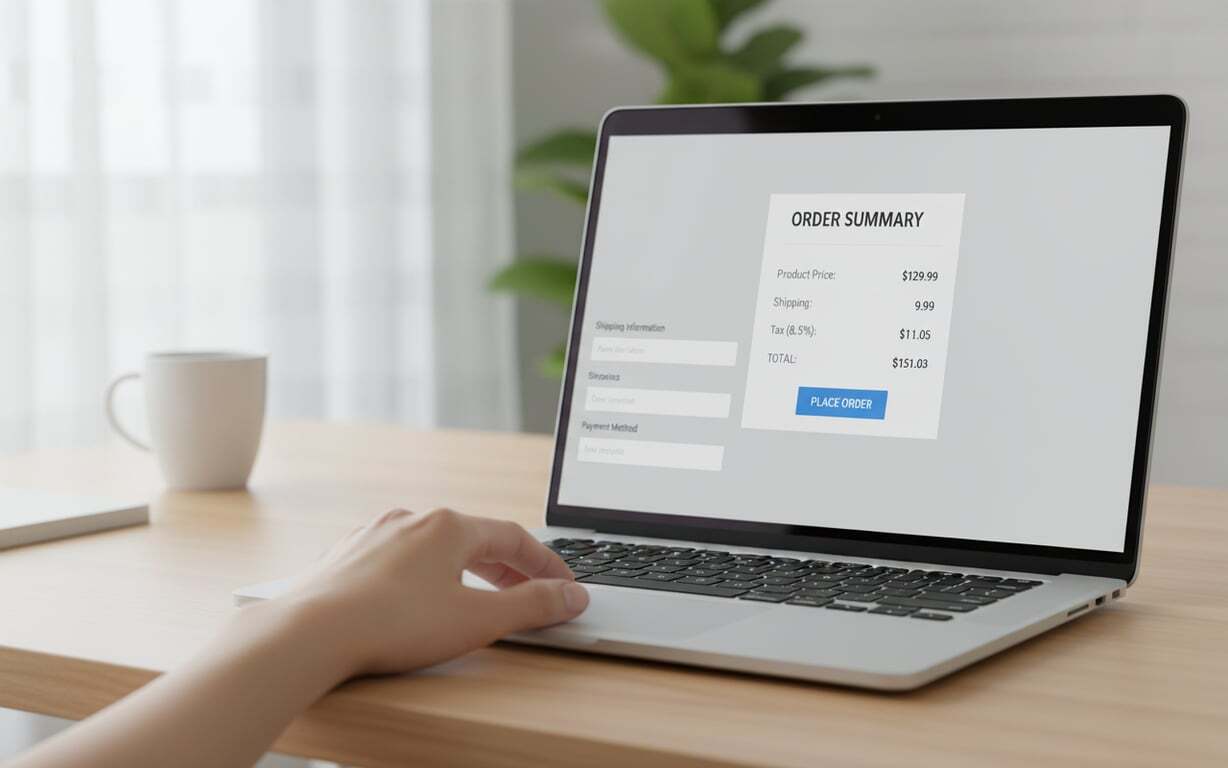
Shipping cost transparency removes the most cited reason for last-minute abandonment: a total higher than the shopper expected. Show shipping, taxes and fees as early as possible, on the product page or in the cart, so the last screen holds no surprises.
Three tools help:
Shipping calculator: an estimate in the cart, based on the shopper's location;
Free-shipping threshold: a message showing how much more to add for free delivery;
Delivery date: an estimated arrival date, more useful than a range of working days.
Cross-border sellers face a sharper version of the problem. Since 1 July 2026, the EU no longer exempts parcels worth €150 or less from customs duty. A temporary €3 duty per item now applies to B2C parcels from outside the EU, until a new customs data system replaces it in 2028 (Avalara overview). Showing the full landed cost at checkout, duties included, prevents both abandoned carts and parcels refused at the door.
Do exit-intent popups for cart recovery work?
Exit-intent popups for cart recovery catch shoppers right before they leave the page and give them one more reason to stay. The script watches cursor movement on desktop and behavior such as fast scrolling up or switching tabs on mobile, then shows the message.
Popups shown to shoppers with a full cart convert better than general site popups. OptiMonk, a popup software vendor, reports an average conversion rate of 17.12% for its cart abandonment popups, based on its own customer data (OptiMonk popup statistics). Treat it as a vendor benchmark.
What decides the result:
Relevance: the popup shows the products actually in the cart;
A concrete offer: free shipping or a discount code, when your margin allows it;
Restraint: one popup per session, easy to close, so it doesn't push away shoppers who were going to return anyway.
If every exit brings a discount, regular customers learn to wait for it. Keep offers for first-time shoppers or high-value carts, and test them against a version without a discount.
What are the cart abandonment email best practices?
Cart abandonment email best practices come down to timing, content and personalization. Done well, abandoned cart emails are usually among the best-performing automated messages a store sends.
To understand how abandoned cart emails work, see them as the second half of a purchase already in progress. The shopper chose the products and started checkout, and the email removes what stopped them.
When to send abandoned cart emails
Email | When to send | What it contains |
|---|
1. Reminder | Within an hour of abandonment | The cart contents, product images, one clear button back to checkout |
2. Help or incentive | About 24 hours later | Answers to common doubts (shipping, returns), optionally free shipping or a discount |
3. Last call | One to two days after the second | A real deadline: the discount expires or stock is low |
Klaviyo's 2026 benchmarks, based on more than 110,000 customers, found that abandoned cart flows bring the highest average revenue per recipient of all automated flows, with an average click rate of 6% per email (Klaviyo abandoned cart benchmarks). Open rates are inflated by Apple's Mail Privacy Protection, so clicks and orders are the better measure.
Content and personalization
Each abandoned cart email needs:
A subject line about the cart: one that names the product or the cart;
Product images: so the shopper recognizes the items at a glance;
One call to action: a single button that opens the saved cart;
Honest urgency: only when the deadline or limited stock is real.
Personalization multiplies the effect. Emails that add complementary products based on what the shopper viewed and added perform better than static templates, a point developed in Search, recommend, reward: how to make every visit count.
Before you send, check consent. In the EU, abandoned cart emails need a valid legal basis under GDPR, so confirm with your legal team how you collect email addresses at checkout.
How can retailers reduce cart abandonment rate beyond checkout and email?
Retailers reduce cart abandonment rate by combining several tactics, each aimed at a different cause. No single fix brings a 70% rate down on its own, and the gains add up.
Guest checkout benefits for ecommerce
Guest checkout is the quickest win. Shoppers who refuse to create an account can still pay, which removes one of the most cited causes of abandonment. Offer account creation on the confirmation page, with the details already filled in.
Retargeting ads for abandoned carts
Retargeting ads for abandoned carts reach shoppers after they leave the site. The strongest campaigns show the exact products left in the cart on social feeds, search and display networks. Cap how often the ads appear, so a reminder doesn't turn into pressure.
Abandoned cart SMS marketing tools
SMS extends abandoned cart recovery beyond the inbox. Abandoned cart SMS marketing tools work for stores that collect a phone number at checkout with explicit consent, as long as messages stay rare.
Saved carts and peak periods
Keep the cart saved across devices, so a shopper who starts on a phone finds the same products on a laptop. Fix checkout well before peak periods: a store that has worked through a Black Friday eCommerce checklist in advance captures more of the extra traffic.
Measuring abandoned cart recovery
Track the abandonment rate by device and checkout step, the share of abandoned carts recovered and the revenue per abandoned cart email. Keep a small group of shoppers who receive no cart reminder, so you can tell which orders the emails actually brought back.
How does AI personalization help with abandoned cart recovery?
AI personalization adapts cart reminders and on-site suggestions to each shopper's behavior. The same reminder sent to everyone gives way to messages built around what each person viewed, added and left behind.
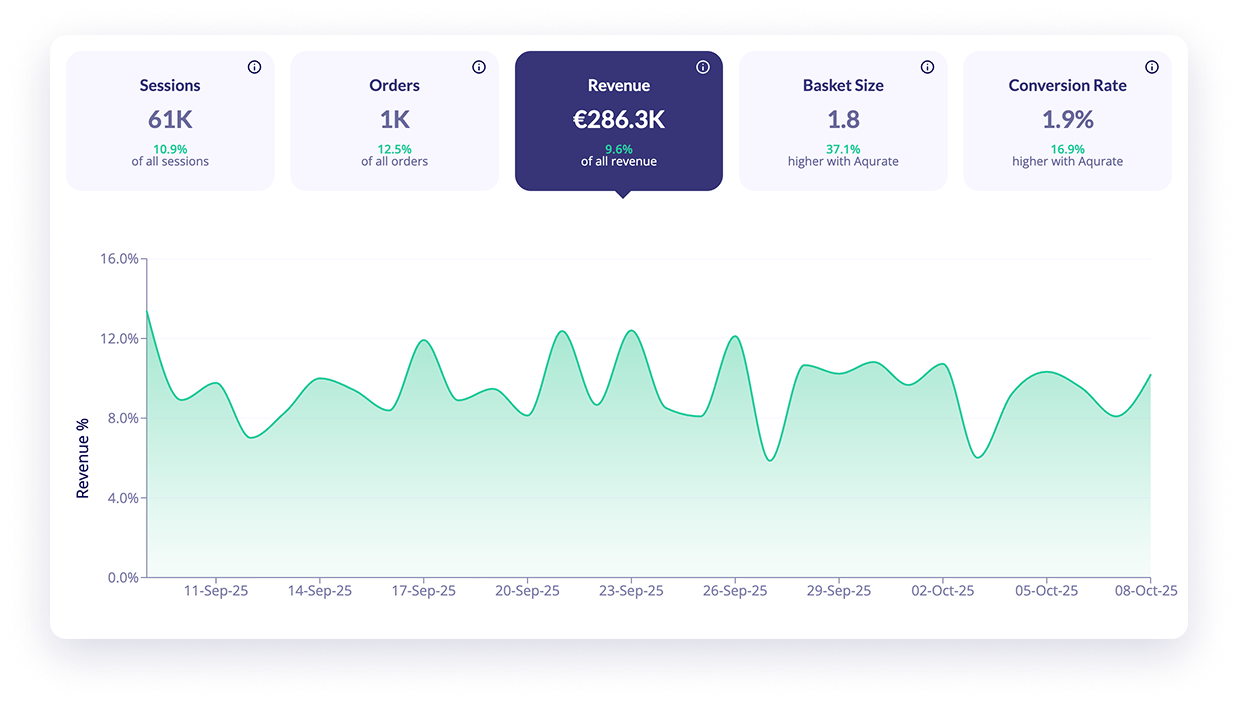
Aqurate offers this through its personalized product recommendation technology, which retailers can use without an in-house data science team. In cart recovery, the same recommendations can go into the reminder emails sent from tools such as Klaviyo or Brevo, and the cart can show frequently bought together products when the shopper returns to the site.
The gain shows up in two places. An abandoned cart email with relevant suggestions gives the shopper more reasons to click, and a returning visitor who sees products matched to their cart is more likely to complete a larger order.
Frequently asked questions about cart abandonment
Is cart abandonment the same as checkout abandonment?
Not exactly. Cart abandonment covers anyone who added an item and left at any point. Checkout abandonment refers to shoppers who started the shipping and payment steps and quit partway through.
How many emails should an abandoned cart sequence have?
Two or three. Engagement usually drops sharply after the third message, and a short sequence of reminder, help or incentive, and last call is the shape most effective abandoned cart recovery flows take.
Is every abandoned cart a lost sale?
No. Many carts belong to shoppers who were comparing prices or saving items for later. Recovery works best on shoppers who reached checkout or showed strong purchase signals.
Should a small store compare itself with the global 70% average?
Only loosely. The more useful benchmark for your cart abandonment rate is your own product category, since grocery runs well below 70% and travel or luxury well above it.
What can a retailer fix this week?
Turning on guest checkout and adding a digital wallet such as Apple Pay or Google Pay. On most ecommerce platforms both are settings, and they address two of the most cited causes of abandonment.
Every recovered cart starts at checkout
Cart abandonment drops when each cause gets its own fix. Show the full price early, let shoppers pay as guests with the method they prefer, and recover the rest with a short, personalized email sequence. Measure by device and checkout step, then fix the next weakest point.
Related reading: